Pool Resurfacing
A smooth, watertight finish — over a sound shell.
Pool resurfacing replaces a worn or failing interior pool finish — plaster, quartz, or pebble — to restore a smooth, watertight surface and address surface cracking and leakage.
Free, no-obligation estimates · Fast, friendly scheduling
- Licensed & insured
- 5★ · 24 Google reviews
- 15+ yrs in Texas
- Detection + repair in-house
Overview
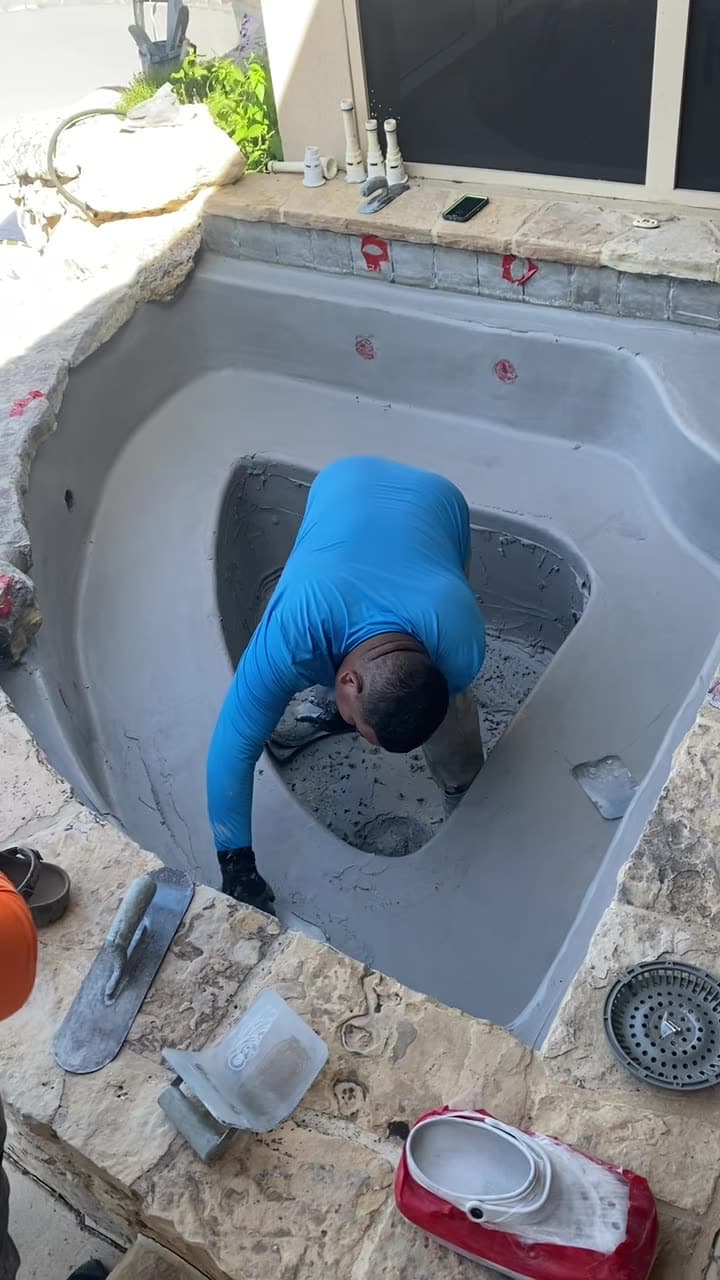
When a pool's interior finish wears out, it gets rough, stained, and prone to surface leaks. Resurfacing restores a smooth, watertight interior. As leak specialists, we repair any underlying cracks and confirm the shell is sound first, so the new finish lasts instead of failing over a hidden problem.
Common Problems & Signs
- Rough, etched, or stained interior finish
- Hollow or flaking plaster
- Surface cracks and crazing
- Persistent surface leakage
Common Causes
- Age and chemical wear
- Improper water chemistry over time
- Underlying shell movement
How We Do It
Detect & repair first
We confirm and repair underlying cracks and leaks.
Prep the surface
We properly prepare the shell for the new finish.
Apply the finish
We apply your chosen plaster, quartz, or pebble finish.
Cure & verify
We guide proper start-up and verify the pool holds water.
Why homeowners choose us for this
A hidden leak only wastes more water and costs more to fix the longer it goes undetected. The sooner we test, the less you lose.
Every repair backed by our workmanship guarantee.
Pool Resurfacing FAQs
How long does a pool finish last?
Plaster typically lasts 7–12 years; quartz and pebble finishes last longer. Resurfacing timing depends on water chemistry and wear.
Do you repair cracks before resurfacing?
Yes. We address any structural cracks and leaks first so the new finish doesn't fail over a hidden problem.
Still have questions about your resurfacing? We answer the phone — and we'll tell you straight if there's no leak. Call (210) 219-0979
Related services
Local conditions that drive pool resurfacing
Available across Texas — with deep coverage in San Antonio & Abilene. Texas soil and water conditions are what make resurfacing so important here.
Why San Antonio pools need Resurfacing
- Soil
- Expansive Blackland (Houston Black) clay that swells and shrinks with moisture, cracking shells and stressing buried plumbing.
- Climate
- Long, hot summers and recurring drought trigger SAWS watering restrictions that make every leaked gallon costly.
- Water
- Served by San Antonio Water System (SAWS), drawing from the Edwards Aquifer.
Why Abilene pools need Resurfacing
- Soil
- Expansive clay and caliche that move sharply through wet/dry cycles, opening cracks and breaking underground lines.
- Climate
- A hot semi-arid climate with wide day-to-night and seasonal temperature swings, plus recurring drought, that hard-cycles pool shells and plumbing.
- Water
- Served by the City of Abilene, drawing from Lake Fort Phantom Hill, Hubbard Creek Reservoir, and O.H. Ivie Reservoir.
Resurfacing across Texas
We provide pool resurfacing in:
Think you need pool resurfacing?
We test instead of guess. Get an accurate diagnosis and an in-house repair plan with no guesswork and no unnecessary work.
Family-owned · 15+ years · Serving Central & West Texas
- Licensed & insured
- 5★ · 24 Google reviews
- 15+ yrs in Texas
- Detection + repair in-house